Phillip Starke


Read less, trust yourself more
Most people don’t read enough. However, there are also some who read too much. For these folks all the reading can counterintuitively lead to decreasing confidence and to analysis paralysis.
Phillip Starke
The Backlog is a newsletter about the undervalued and overlooked in modern product development. It covers product development, self organization, and productivity. I include methods, books, and write about my own experience.
Subscribe to get new posts straight to your inbox.
Most people don’t read enough. However, there are also some who read too much. For these folks all the reading can counterintuitively lead to decreasing confidence and to analysis paralysis.
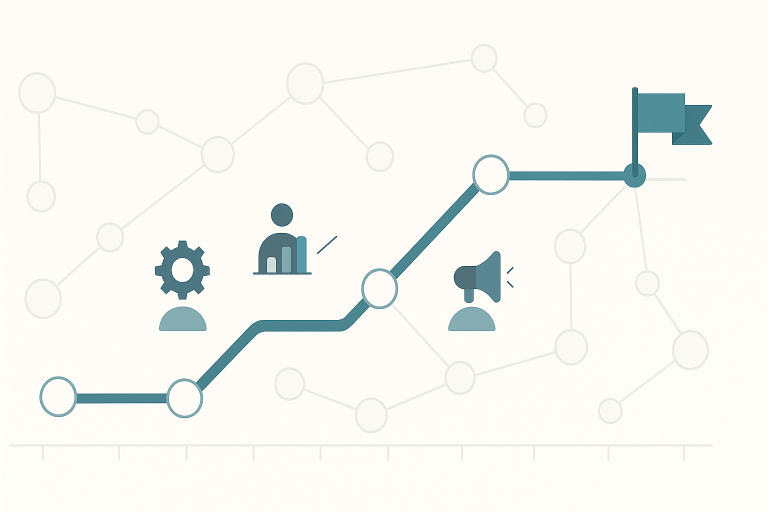
Every delayed launch I have witnessed had the same root cause: someone missed a dependency or started an activity too late, not realizing it was on the critical path. While there are many important skills and tools in project management…
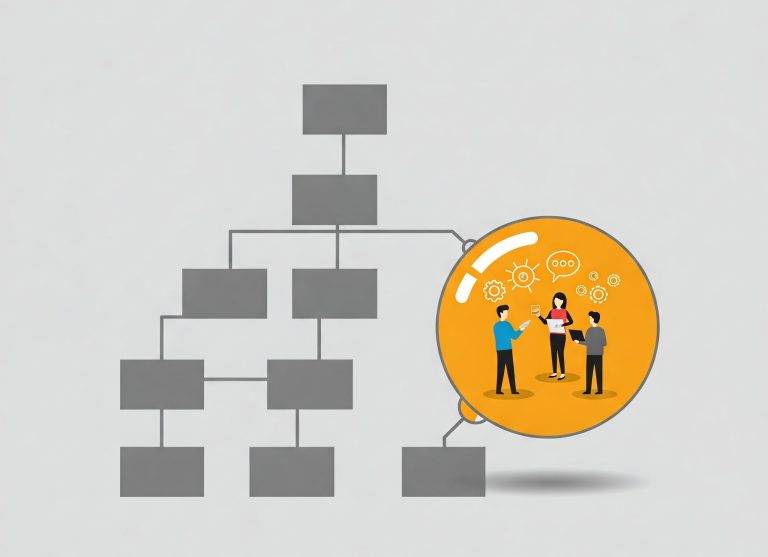
Companies pour millions into transformation projects, only to end up with a frustrated workforce and no change. Starting small is better.

Quarterly planning should not be necessary, but it often is. Here is the four step process we used and three things that make it work.

Bashing agile scaling frameworks like SAFe, LeSS, or NEXUS seems to be all the rage right now. It’s easy to do so. They often seem convoluted and opposed to the original agile spirit. I am also not their biggest fan. But I can acknowledge that there are reasons why they exist. In my mind the discussions around agile scaling frameworks are not nuanced enough and ignore the realities often present in companies applying them.
I recommend Empowered by Marty Cagan to anyone asking for advice on becoming a better product leader. It offers tons of actionable insights.
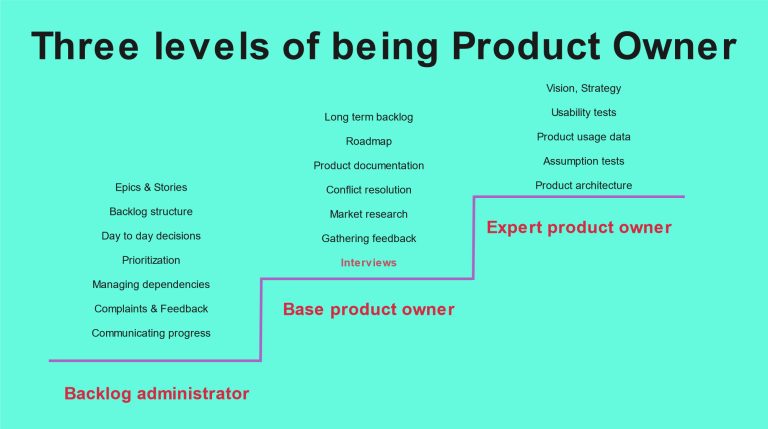
Many do not fulfill the potential of the Product Owner Role. Thinking about the role in three levels of being a product owner can help create a path for growth.

Lack of organizational focus is the reason most companies don't fulfill their potential. Kanban and other tactics can help you still thrive.
Antifragile by Nassim Taleb is thought provoking and forces you to look at things from a different angle. I share the main concepts and my personal takeaways.

Trying to hide one's insecurity is one of the main causes of waste in product development that no one is aware of. The solution: transparency.

A lack of trust is the main source for meddling and micromanagement in product development. Communication is the way to build trust. Here is how to go about it.

A source of frustration for product teams is a lack of direction from management. To overcome this you need to take on extra responsibility.

Any team profits from writing down team purpose and team values. What are these artifacts? And what is the easy way to define them?

Many have to deal with low performers in teams. The good news: underachieving is not a character trait. You can do something about it.
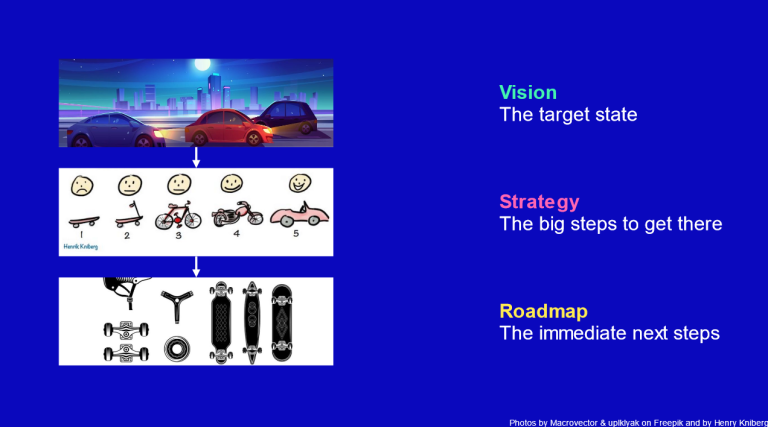
Why do you need a product strategy, what is it, and how do you create one? I answer those questions and share a strategy we recently created.

If you are trying a new approach within an established organization you will face headwinds early on. How to get going? Build something!

Many claim to be data driven in their decision making. But no one ever explains what that actually means in practice. While making data driven product decisions sounds great in theory, actually doing so is not always easy. The way to get there may seem straightforward but many struggle with the details.

In product development it seems to me that there is too much focus on labels and specific frameworks or methods. Regardless of how we get there, many seem to forget that the goal is always to create successful products. The goal is successful product development. What does this mean?

In product development, changing priorities are frustrating. Luckily, there are best practices in dealing with frequent strategic shifts.

Turnover is tech is high. The main reason for this is poor leadership. Fortunately, there are things you even if you have no formal power.

The things I read in 2023 and liked the most. I include articles, fiction, and non-fiction books.

Split heads are people that are assigned to multiple teams. A team of split heads has many negative effects but there are ways around those.

Stakeholder management is a core activity for anyone working in product development. It is key to building a successful product in the confines of a company. Also, it is rarely a topic of conversation.

One of the most frequent questions I get from teams new to Scrum is how to deal with unfinished stories after the sprint. More often than not, my recommendation surprises the teams. It is very simple and often seems counterintuitive…

Many believe that agile coaches can't be product coaches. I disagree. A good agile coach and product coach want the same: great products.

It can be difficult to get buy-in from the team members for a new approach like Scrum. The most effective way to create an open mind is showing what is in it for them. Making the daily work of the team easier and building a relationship on eye level are the key. These eight best practices are aimed at doing exactly that.

A large portion of the workforce is unhappy in their job. Why do they not quit? What are the benefits of quitting a miserable job?

There are ways to conduct effective brainstorming sessions. It’s just not the way they are typically done. Psychology is key.

Anyone responsible for a product knows the situation. Some stakeholder comes with a feature request along the lines of “Can we please add Feature X to the product. It is important because of reasons. Please add it yesterday. Thanks.” How can you deal with these stakeholder requests?

A user story map visually depicts the entire backlog along the user journey while simultaneously showing the priority of user stories associated with each step. User story mapping is an excellent communication aid getting everyone on the same page and it allows for easy definition of releases. It is where you can clearly see the steps from MVP to fully fledged solution.

5 ways to deal with the challenge of attempting to establish a Scrum team (actually any new team) within an existing organization.

Product Manager, Project Manager, Product Owner, Program Manager: a lot of managers, a lot of words that start with the letters Pr. Maybe that is at the heart of why so many people seem to confuse the roles. They all…

Let’s be honest, many companies do not implement the best practices of agile, lean, or other frameworks as they were intended. Organizations, human nature, and processes get in the way of the best intentions. Thus, companies often end up with…

Not all of us have a "real" mentor. Formulating your issues and imagining the mentor's advice works as well! It is surprisingly easy.

Continuous Discovery Habits is a practical, extremely useful book. I share the main concepts and the three most important personal takeaways.

The opportunity solution tree is an extremely useful method. Having already covered the why, how and what of the opportunity solution tree, I will focus on the best practices that I have found to be crucial in maximizing the potential of the OST.

The opportunity solution tree (OST) was invented by Teresa Torres as a means to collect and visualize the opportunity space. It is a model or mental representation that clearly links product goals to user needs and to the options for solving those needs. In product discovery, it is a powerful tool for creating a clear structure of what the team wants to achieve.

We often feel the need to immediately fill silence with answers, comments, or questions. And I get it, being in a group where nobody speaks for some moments can be extremely uncomfortable and awkward. Being able to withstand the urge to say something in those moments of silence is not easy to do.

The core of agile development - it should be at the heart of all product development efforts for that matter - is iteratively moving forward. We need to understand the impact of what we are doing without waiting for too long. For this reason, Product teams need to use leading indicators so that they can immediately measure the effectiveness of their product development.

Although the big hype around Objectives and Key Results (OKRs) from a few years ago seems to have receded a bit, many companies still deploy OKRs to manage their organization. Many seem to consider this the “agile” way to set…

Sometimes you come across a book at just the right time. The content immediately makes sense and you cannot stop reading. This happened to me when I recently read Inspired by Marty Cagan.

Roadmaps are ubiquitous. Everybody working in product development has encountered one. If you are a project manager, product owner, or product management professional you probably maintain one that you are using regularly to communicate timelines, priorities, and strategy. Also, you are likely unable to predict the future.

In its essence, agile product development is a mindset for dealing with an uncertain environment. The best way to do that is to find the path forward one step at a time. This means delivering frequently, observing how users react and interact with the product, and adjusting the approach for the next iteration according to the feedback and observations. Scrum is the manifestation of exactly this approach within a project management method.

The sprint planning meeting in Scrum is the ceremony that kicks off every sprint. If prepared correctly, it is the smoothest of all the Scrum meetings and sometimes takes no more than a few minutes. The planning can, however, also descend into chaos and be a huge source of discontent and frustration for the team.

Whenever I work with teams in product development, I have two main goals: create value for the user and make sure the team is happy. Though there are many more, I honestly believe that a happy team and value for the user are by far the most important. Everything else is downstream from those two.

The daily stand-up, daily scrum or simply the daily is the shortest of the Scrum ceremonies. If done right, the daily scrum is a very effective ceremony for removing issues, sharing information, team-building, and improving communication.

Along with the refinement, I find the sprint retrospective to be the most important ceremony within the Scrum Framework. It embodies one of the main features of agile product development, iterative improvements. This is, in my view, at the heart of agile product development. Iteratively improving not only applies to the product itself but also to the developmental process, the method of collaboration, and used frameworks.

The Seven Habits of Highly Effective People by Stephen Covey is probably the book that had the most overall impact on my life. Other impactful books mostly touched my professional life. This one not only did that, but also changed my life outside of work. It impacted my character.

Creating a product vision is not overly complicated, if you keep three things in mind. Start with users, involve others, and write it down.

To me, there seem to be six characteristics that describe any well crafted product vision. Many more exist but the following stand out to me in describing what a compelling vision is.

A product vision is of paramount importance. This seems to be a given. You can find a lot of material that simply states this as fact without explaining why this is the case. Many write about what a vision is and plenty of folks provide frameworks or methods for creating a product vision. However, rarely do they explain why the product vision is needed, what the reasons are for creating one. It seems to simply be assumed that everybody already knows. Why is it so important?

All companies know their What. It is what they are offering, the services and products they are selling. Some companies know their How. It is how they are building and offering their products and services, their values, their culture. The how is often also called Unique Value Proposition (USP). Only the rarest of companies are able to actually say Why they are doing what they are doing, what the real motivation is, what their purpose is

Agile is not Scrum, Lean, Kanban, DevOps, Extreme Programming, or any other agile method used in modern product development. Don´t get me wrong, all of these frameworks have a reason for being. I am working as a Scrum Product Owner (PO). We are successful and I thoroughly enjoy using this method. Scrum is one way (of many) to manifest and formalize agile principles. It is not equal to Agile. Agile development is a mindset centered on principles.

I recently wrote about the core competencies of a Product Owner (PO). Within that text I didn´t address technical skills. This topic is large enough to warrant a dedicated post. Well, here it is. Does a Product Owner (PO) need deep technical understanding to be successful?
In my view, the short answer is a clear NO for the vast majority of products. The long answer is a bit more nuanced: it depends. Overall, I do believe that technical understanding for a PO is a net positive. However, it can also lead to some negative outcomes.
I will dive into the pros and cons first before addressing some general points.

Besides Scrum, Kanban is probably the most prevalent system for managing workflow in agile product development. It is a very flexible system, with little overhead. As such, Kanban is very easy to implement. Many enjoy the feeling of flow that results from using a Kanban system.

To me, the sprint review is an extremely valuable ceremony. The principles behind the session itself are powerful, universally true, and can be applied outside of Scrum as well. Nevertheless, I feel that the goal and the importance of the review is sometimes misunderstood.

have read a few books that had a significant impact on my professional (and personal) life, maybe none more so than “Getting Things Done” by David Allen and “The 7 Habits of Highly Effective people” by Stephen Covey. However, a few months ago, I discovered the work of Cal Newport and read his book “Deep Work”. Its impact on my thinking was and is on par with the classics listed above.

In agile product development, particularly in Scrum, it is common to estimate user stories. Most of the time, an estimation of a user story is done with story points along a fibonacci series. User story estimation is a valuable but inherently subjective and inexact process. I also believe it is often misunderstood.

I have realized that the distinction between different types of value created in product development is very important. For long term success the value to end users needs to be (back) in the center.

Whenever I start working with a new team, one of the first things we do is defining the Definition of Ready as well as the Definition of Done. Defining and using those two artifacts is not overly complicated but saves all involved from a lot of stress down the road.
Nevertheless, I frequently find teams that use neither or don't even know what they are. Thus, I think it makes sense to address what Definition of Done (DOD) and Definition of Ready (DOR) are and why they exist.

Don´t get me wrong, many software tools are fantastic products. I use a wide variety daily. However, I feel like their impact is overvalued. Or maybe, to put it better, I think they are misused. Far too often is some new license for a tool purchased because “we are not meeting our targets”. The hope is then that the tool magically solves everything. Spoiler alert: It doesn't.

Can Scrum and a Scrum team work without a Scrum Master? The short answer is yes. I believe it is possible. The longer answer is a bit more complicated. The Scrum Master Role was created for good reason and not having one will lead to some negative effects.

It generally seems to be the case that we have too many ideas for improvements but not enough time to do them all right away. Therefore, backlogs tend to become large. In order to be able to handle this, it is so important to organize the backlog in a structured way.

Writing a user story is not rocket science. Nevertheless, it is a point of significant leverage for the success of product development. As such, I feel that the task is undervalued. Thus, this post describes how to write user stories.

The Product Owner (PO) is an extremely important role that includes a diverse set of responsibilities and an empowered PO can have a tremendous impact on product development, if he or she is able to handle the many jobs of a PO. This raises the question of what skills are needed to do just that. Thus, in this third installment of the series on the PO I will focus on answering the question What are the core competencies of a Product Owner?

In general, it seems most people agree that remote work is a net positive but it also poses some challenges. Very underrated are the effects of remote work on company culture. The challenges to building a real team are probably more obvious. Nevertheless, I feel they are worth addressing.

A PO has many responsibilities, too many to mention them all here. I will focus on the three that are in my view the most important.

The text is very much an answer to the question “Why is the Product Owner needed?” or “Why is the Product Owner important?”. However, much of what I write below is also valid for project leaders or team leads within product development - even if those teams are not working with Scrum or other agile methods.

Now that the intense part of the corona pandemic is over (fingers crossed), companies and teams are transitioning to a permanent new normal, and figuring out how to do so. Thus, now is a good time to write down some thoughts on how to deal with the effects of remote work, specifically on company culture.

I recently wrote about the benefits of doing one thing at a time and the downsides of Multitasking. While listing things that can be done to facilitate doing one thing after another for a team, I completely missed to mention maybe the most important factor: having a dedicated team.

We want to satisfy stakeholder requests, regardless if that means saying yes to a new feature or if it means to answer an e-mail. It's hard to say no. It makes us feel good to always answer, it makes us feel like we get a lot of stuff done. Spoiler alert: we actually don't get a lot done and productivity suffers.

Trying out elements of agile in non-software development with a set-up that is not according to the book might be controversial. However, applying the principles can have some real benefits if this is done mindfully.

Have you ever started a big project, felt like you were standing in front of this mountain of tasks and you had no idea where to start? I have. And I was only able to slowly but surely climb the mountain by completely changing the way I organize and manage myself.

Let me tell you something. It can be really liberating, to say the three words "I don't know". As soon as you have done it a few times you will find that it turns out to be very easy and that it brings some real benefits.

they all have important wishes and ideas on how to improve the product. However, product development is always constrained by capacity and available time. Thus, the PO has to rigorously prioritize and frequently deny requests.

Besides the retrospective, the backlog refinement (sometimes called grooming) is in my view the most important ceremony within the scrum framework. One could even argue that it is the most important one. It certainly has an outsized positive impact on team productivity, created value, and team chemistry - if done correctly.

Oh boy, what a topic this is going to be. Everybody seems to hate them. Yet, they somehow can´t be avoided. So much has been written about them but we still seem to struggle on how to deal with them, meetings.

Slicing requirements horizontally instead of vertically, it sounds so easy but is so hard to do in practice. It is, in my view, one of the main features of agile that unlocks team productivity.

I am currently reading the book Deep Work by Cal Newport and it is having a real impact on me. A lot of topics covered within it are things I have implicitly thought were true but never seen formulated or been able to spell out myself. One thing mentioned in the book that particularly speaks to me is the fact that for several reasons one cannot be productive in 100% of working hours although many - including myself - often times have the illusion that it is possible.

Raise your hand if you have been in the following situation. A colleague comes to your desk (or nowadays: they call you on zoom) to discuss something. You are busy. You quickly open the Calendar to find a time slot for a meeting. Unfortunately, you have no time right now and are also fully booked in the next days. Thus, you schedule a meeting in two weeks. Right before switching to the Calendar, you were able to catch a very brief glimpse of your e-mail inbox with the approximately 700 flagged or otherwise highlighted items that still need to be taken care of.

I have four core principles that shape my professional life:
Pragmatism beats Dogma
Honest communication is key
Deliver value fast through decisive action
Have fun
What do I mean by these? Well, let me explain…