Phillip Starke

A three leveled approach to being a product owner
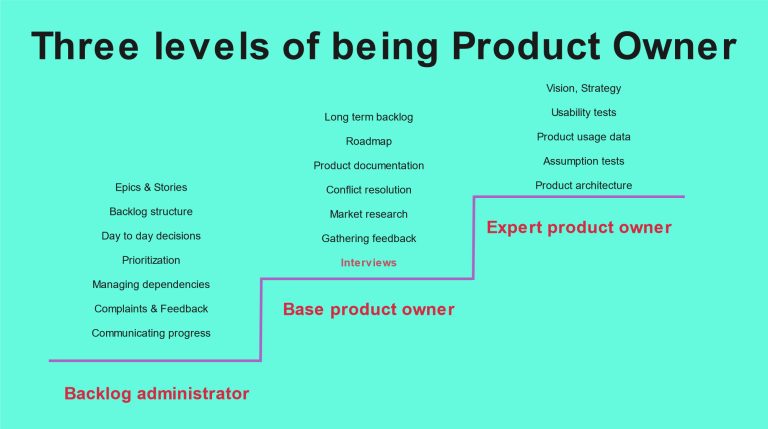
Many do not fulfill the potential of the Product Owner Role. Thinking about the role in three levels of being a product owner can help create a path for growth.
Phillip Starke
Many do not fulfill the potential of the Product Owner Role. Thinking about the role in three levels of being a product owner can help create a path for growth.

Lack of organizational focus is the reason most companies don't fulfill their potential. Kanban and other tactics can help you still thrive.

In product development it seems to me that there is too much focus on labels and specific frameworks or methods. Regardless of how we get there, many seem to forget that the goal is always to create successful products. The goal is successful product development. What does this mean?

Many believe that agile coaches can't be product coaches. I disagree. A good agile coach and product coach want the same: great products.

It can be difficult to get buy-in from the team members for a new approach like Scrum. The most effective way to create an open mind is showing what is in it for them. Making the daily work of the team easier and building a relationship on eye level are the key. These eight best practices are aimed at doing exactly that.

Anyone responsible for a product knows the situation. Some stakeholder comes with a feature request along the lines of “Can we please add Feature X to the product. It is important because of reasons. Please add it yesterday. Thanks.” How can you deal with these stakeholder requests?

Let’s be honest, many companies do not implement the best practices of agile, lean, or other frameworks as they were intended. Organizations, human nature, and processes get in the way of the best intentions. Thus, companies often end up with…

Continuous Discovery Habits is a practical, extremely useful book. I share the main concepts and the three most important personal takeaways.

The opportunity solution tree is an extremely useful method. Having already covered the why, how and what of the opportunity solution tree, I will focus on the best practices that I have found to be crucial in maximizing the potential of the OST.

The opportunity solution tree (OST) was invented by Teresa Torres as a means to collect and visualize the opportunity space. It is a model or mental representation that clearly links product goals to user needs and to the options for solving those needs. In product discovery, it is a powerful tool for creating a clear structure of what the team wants to achieve.